

Stay updated with our letter
Valuable perspectives on the latest trends and tips.


Bespoke WordPress Website: How to Create One from Scratch


A bespoke WordPress website should fit the way your business communicates and operates. That might mean a clearer service structure, a distinctive editorial style, a carefully designed enquiry process or an editing system that your team can use without breaking the layout.
The word “bespoke” is less useful when it only means changing the colours of a template. It is also misleading to suggest that a custom project must reinvent every technical component. Good work uses established foundations where they make sense and invests custom effort where the business genuinely needs it.
This guide explains the design and build process, the trade-offs and how to compare costs. The aim is a website shaped around the content and audience, with a practical plan for the people who will maintain it after launch.
What makes a WordPress website bespoke?
WordPress is an open-source content management system. Its themes, plugins and editing tools provide a foundation that can be configured and extended. A bespoke project makes deliberate decisions about how that foundation serves a particular brief.
The custom work may include visual design, templates, reusable content sections, integrations or specialist functionality. Ask a supplier to explain which parts are designed for you, which rely on existing products and what that means for licensing, updates and future changes.
A custom theme is one possible route, but it is not the only sign of a thoughtful implementation. WordPress block themes and the Site Editor can support site-wide editing with blocks. The right approach depends on the editorial controls, design requirements and maintenance needs of the project.
design subscription services can provide access to existing creative assets or themes, subject to current terms. That is a different purchase from commissioning a team to research, design and implement a site around your requirements. The commercial link may generate a commission; assess what you actually receive rather than treating the subscription as a bespoke service.
When custom work earns its place
A tailored approach is useful when a standard structure forces awkward compromises. Perhaps the service offer is difficult to explain, several audiences need different routes, or a repeated content type needs more than a generic page editor. Those are concrete reasons to investigate custom work.
Uniqueness alone is not enough. A visitor should not have to learn an unfamiliar navigation pattern just because the site is bespoke. A distinctive brand can work with familiar controls and clear information. Creativity is most useful when it improves the relationship between the content and the reader.
Custom development also brings responsibility. Someone needs to understand the implementation, maintain it and test changes. It is not automatically faster, more secure or infinitely scalable than a well-chosen existing solution. Those qualities depend on decisions and evidence, not the label on the proposal.
| Business need | Useful custom work |
|---|---|
| Services are hard to understand | A content structure and page hierarchy shaped around buyer questions |
| Editors repeat the same work | Reusable content models and controlled templates |
| An external system supplies data | A defined, tested integration with clear ownership |
| The brand needs a stronger presence | Purposeful typography, imagery and composition using real content |
Use examples to identify a principle
The original shortlist included Apollo, Ruya, Nove, PichiAvo, Moooi and Noma. They remain useful independent design references across finance, consultancy, art, products and hospitality. Their inclusion does not claim that Fit Design created them, or verify that every current version uses WordPress.
Look beyond the opening screen. Apollo provides a reference for organising information for several audiences. Ruya and Nove prompt questions about how a consultancy explains its services and work. PichiAvo invites consideration of how a visual portfolio is presented. Moooi and Noma offer different contexts for expressing a distinctive identity.
Bring the principle into your brief rather than asking for a copy. You might want a clearer division between audiences, a better relationship between images and text, or a more memorable introduction to the business. Explain why the reference helps and what your own content must achieve.
Also consider the production requirements behind the appearance. An image-led design needs suitable photography and a plan for future images. A sophisticated interaction needs implementation and testing. A reference can establish ambition, but it does not establish the cost or technical scope of your project.
Begin with discovery and the content
Before wireframes, establish who the site serves and what those visitors need to do. Review the existing content, important URLs, enquiries and operational constraints. Decide what should be retained, improved, consolidated or created, with enough evidence to support those choices.
Write a short statement of purpose for each important page. A service page might explain suitability and scope; a case study might demonstrate relevant experience; a contact page might help the reader reach the correct team. If two pages have the same purpose and little distinct content, investigate the overlap.
The products or services determine the detail. A catalogue for custom PVC keychains, for example, needs a clear way to explain product options and the ordering journey. That external product reference is not a claim about Fit Design’s portfolio. It illustrates why the content model needs to match what is actually being offered.
Similarly, a firm hoping to get legal leads needs to define a suitable enquiry process and the information required at the first contact. The linked commercial resource is separate from the website implementation. Adding a form or live chat does not itself guarantee relevant leads.
Turn the structure into a readable design
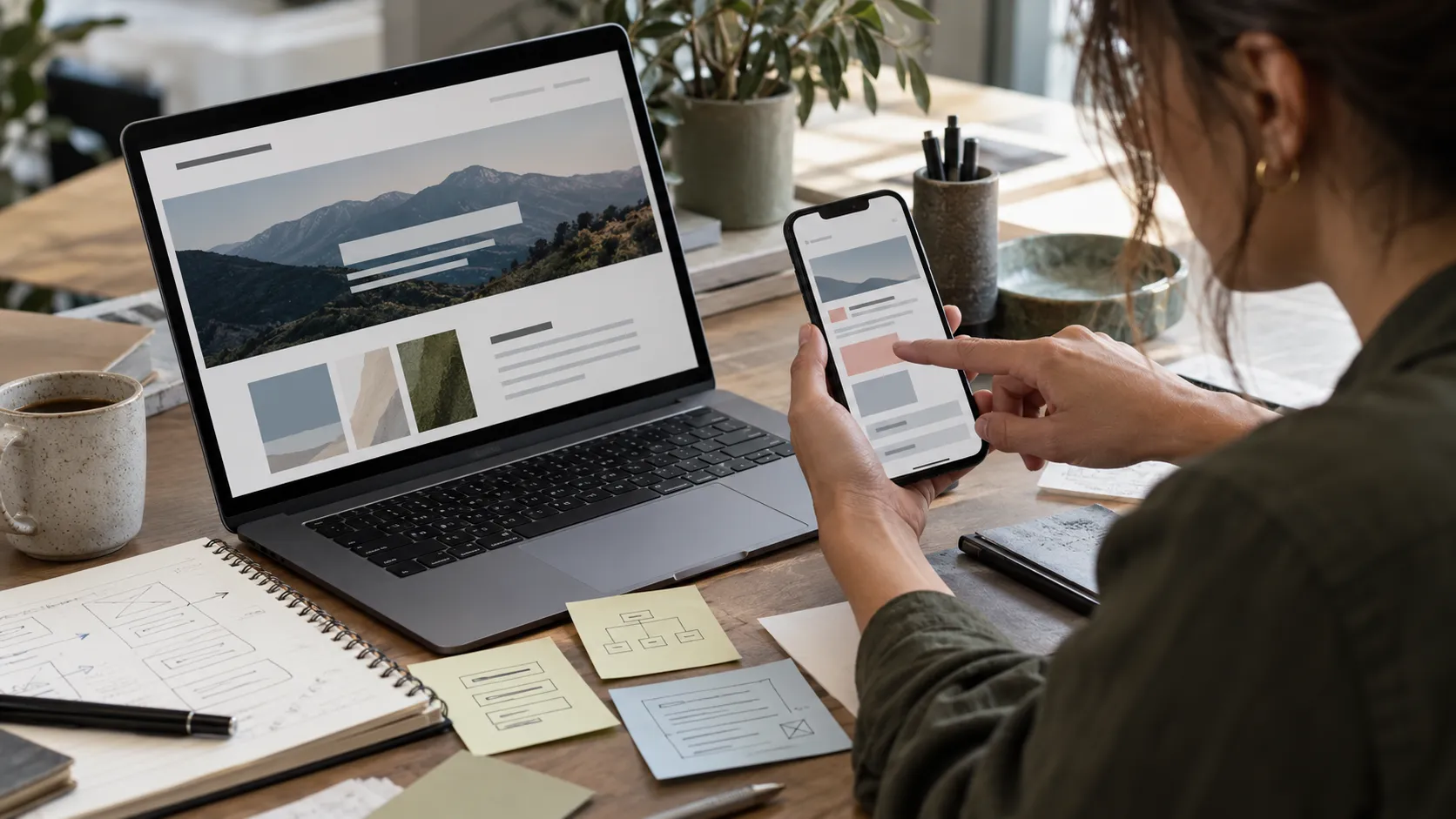
Wireframes help establish hierarchy before visual styling becomes the focus. They should contain realistic headings and enough representative content to expose awkward layouts. A perfectly balanced placeholder sentence tells you little about a page that will eventually contain a detailed explanation.
Review the sequence as a reader. Does the page establish the subject, develop the explanation and offer a sensible next step? Tables, callouts and interactive sections can help at specific moments, but the page should not become a series of components competing for attention.
Develop the visual direction around typography, spacing, imagery and contrast. Then test it on a long page, a short page and a narrower screen. A custom design should remain coherent when the content varies, rather than depending on every section having the same length.
Build an editing system people can use
The editing experience is part of the product. Decide which elements staff can change, which are reusable and which need protection. An editor should not have to reconstruct a complicated layout every time they publish a routine update.
In a block-based setup, templates and patterns can help establish repeatable structures. Explain how the chosen approach works and where changes apply. Editing one page, changing a reusable element and altering a site-wide template are different actions with different consequences.
Keep important information in a clear source where possible. If a phone number appears across several pages, avoid a workflow that requires someone to find and edit every copy manually. The same principle applies to team details, service information and other repeated content.
Plugins and custom code should each have a purpose. Ask what depends on a paid licence, who owns it and what happens if the product changes or support ends. More plugins do not automatically create a more capable site, while custom code is not automatically the better answer to a common requirement.
Make performance and accessibility part of implementation
Use images sized for their role, keep unnecessary scripts under review and test the interactions the audience needs. A homepage score alone does not describe the performance of a long article, a search page or a form connected to another service.
Responsive work should include real content and realistic states. Check long titles, missing images, tables and form errors. Keep ordinary words readable instead of forcing them to break mid-word to fit a narrow component.
Accessibility needs both implementation and review. Labels, focus, keyboard behaviour, contrast and meaningful structure matter across the site. An automated report can identify some issues, but it cannot establish that every user can complete the important tasks.
A caching or security plugin may contribute to a wider approach, but it does not replace responsible configuration, updates, backups and testing. Agree the operating responsibilities instead of describing a plugin installation as a complete maintenance strategy.
Keep search work connected to useful content
SEO services should support the site’s purpose and existing search value. Review the subject and intent of important pages, write clear titles and headings, and connect related content with useful links. During a redesign, preserve established URLs where possible and plan necessary changes carefully.
The phrase long-tail keywords relevant points to a wider audit-tools resource in the original guide. Use research to understand the questions people ask, not to force repeated phrases into every paragraph. A technically optimised page still needs to explain its subject well.
There is also growing discussion around LLM SEO optimization. Treat any commercial claim about visibility in AI-generated results carefully. Clear, accurate and well-supported content is a sensible foundation; a bespoke WordPress build cannot promise inclusion or placement in a system outside the agency’s control.
Review old content for claims that have aged. Prices, product capabilities and external references need appropriate checking. Changing the publication date without improving the substance is not a meaningful refresh.
Choose a partner by evidence and working fit
The original agency shortlist named Kota, Fit Design, Reactive, Together, Plug & Play, Propeller and Illustrate Digital. Treat those names as research starting points, rather than a verified ranking or a reliable guide to current fees. Confirm the relevant service, experience and availability directly.
When discussing a project with Fit Design, or another supplier, ask who will work on it, what the proposal includes and how quality will be checked. The retained creates WordPress websites link leads to a migration-related service page; establish the current platform scope directly rather than inferring it from the anchor wording.
A useful proposal explains how content, design, development and launch fit together. It identifies decisions you need to make and what the agency needs from you. Ask to see relevant work and discuss the implementation behind it, including the editing and maintenance experience.
A professional web designer or developer should be able to explain technical choices in terms you can assess. If a recommendation depends on an integration or a special requirement, ask what has been verified and what remains an assumption.
What determines the price?
WordPress web design costs depend on the scope of the work, including content, design, functionality, integrations and migration. A simple brochure site and a complex publishing system should not be priced as though the only difference is the number of pages.
Ask for the proposal to separate the initial project from recurring charges. Hosting, domain renewals, software licences, support and content updates may have different owners and billing arrangements. Check what is included in the stated period and what is charged separately.
A bespoke theme is one part of a website, not necessarily the whole deliverable. If a quote focuses on the theme, clarify whether it also includes content entry, forms, integrations, testing and launch. Comparing two totals without comparing those details can hide a substantial difference in scope.
A budget conversation becomes more useful when priorities are clear. Distinguish essential requirements from improvements that can follow later. If the available budget cannot support the complete wish list, reduce the scope deliberately rather than keeping every feature and quietly reducing the quality checks.

Launch with a handover and a maintenance plan
Before launch, review the site with the final content and test the important journeys. Check enquiry delivery, links, redirects where needed, access settings and the operational details the business relies on. Agree who can approve launch and how any unresolved issues are handled.
Prepare for recovery as well as success. Know where backups are kept, what the rollback route is and who is available if a problem appears. A quiet launch window can help coordination, but the timing should suit the actual business and the people supporting it.
Handover should include account ownership, editing guidance, licences and responsibilities. Show the team how to perform the routine tasks they will actually need, rather than giving a generic tour of every setting.
- Content: who checks accuracy and publishes changes?
- Technical maintenance: who updates and tests the system?
- Enquiries: who notices and investigates delivery problems?
- Support: what is included, and how is additional work agreed?
A bespoke WordPress website succeeds when its custom decisions remain useful after launch. The strongest result is a clear experience for visitors and a manageable system for the business, supported by an honest scope and a repeatable standard of care.
It is a website whose content structure, design and implementation are shaped around a particular brief. It can still use established WordPress components where they are suitable; bespoke does not require reinventing every part.
The cost of a custom WordPress website depends on content, design, functionality, integrations and delivery requirements. Use any calculator as an initial planning aid, then request a proposal that separates the project scope from recurring services and support.
A custom theme is one possible approach. The right implementation depends on the design, editing controls and maintenance requirements. Ask which parts are custom and which rely on existing products.
No. Performance and search quality depend on implementation, content and ongoing care. A custom label does not guarantee rankings, accessibility or a faster user experience.
Agree account ownership, editing guidance, licences, backups and responsibilities for updates, testing and support. The team should understand the routine tasks needed to maintain the site.


Where ideas come to life
We explore various aspects of modern life, offering valuable perspectives on the latest trends, and helpful tips.

